

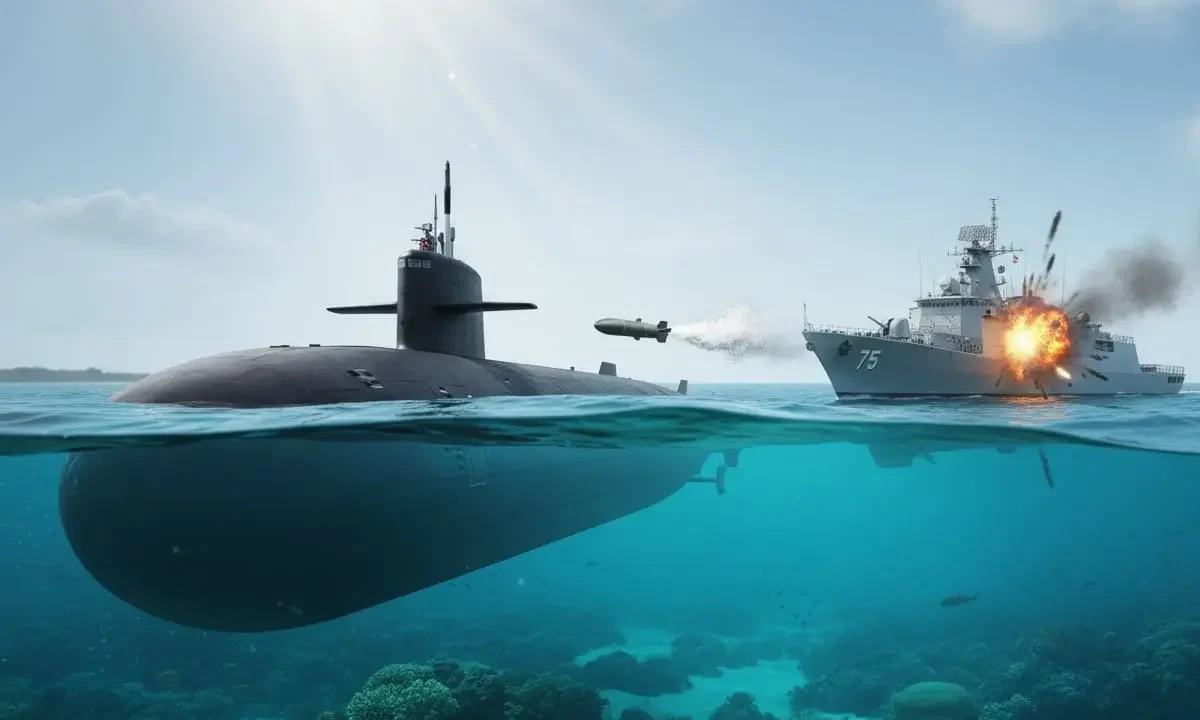
Iranian Warship Sunk by U.S. Submarine in Major Escalation
A U.S. Navy submarine torpedoed and sank the Iranian warship IRIS Dena in the Indian Ocean near Sri Lanka on March 4, 2026, U.S. defense officials confirmed. The attack — carried out in international waters — resulted in dozens of deaths and survivors rescued by Sri Lankan authorities.
U.S. Defense Secretary Pete Hegseth called it a “quiet death” and noted that it is the first time since World War II that a U.S. submarine has used a torpedo to sink an enemy surface combatant. The strike signifies a significant expansion of the ongoing conflict between the United States, Israel, and Iran beyond the Middle East.
What Happened Off the Coast of Sri Lanka
According to Sri Lankan officials, the Iranian frigate IRIS Dena was approximately 20 nautical miles south of Galle when it was struck. The vessel had been returning from an international naval exercise in India’s Bay of Bengal before the strike.
The Sri Lankan Navy responded to a distress call and launched a search-and-rescue mission. So far, authorities have:
- Rescued 32 sailors from the water
- Recovered at least 87 bodies
- Hundreds remain missing or unaccounted for as rescue efforts continue.
First Submarine Torpedo Kill Since WWII
In a Pentagon briefing, Defense Secretary Hegseth and Gen. Dan Caine, Chairman of the Joint Chiefs of Staff, highlighted the historical nature of the strike: a fast-attack U.S. submarine fired a single Mk-48 torpedo that destroyed the Iranian warship. This marks the first confirmed submarine torpedo kill by U.S. forces since World War II.
Hegseth said the Iranian vessel “thought it was safe in international waters,” but was struck and sank quickly, underscoring the reach of U.S. naval power and the severity of operations against Tehran’s military forces.
Broader Implications of the Strike
The attack illustrates a major escalation in the widening conflict involving the U.S., Israel, and Iran. Although the war has largely been centered in the Middle East, this incident — taking place near Sri Lanka — highlights that the conflict is stretching into other regions. Experts are watching closely for diplomatic fallout and possible retaliation.
Officials in Washington have framed the strike as part of a campaign to diminish Iran’s naval and missile capabilities, while critics warn of increased risks for global naval commerce and regional instability.
International Response and Rescue Efforts
Sri Lanka’s navy played a crucial role in the immediate aftermath, searching for survivors and recovering the deceased. Local media reported that many sailors were found floating in the water and others were taken to hospitals in nearby coastal cities.
World leaders are monitoring the situation, with concerns rising over the conflict’s expansion and potential effects on shipping lanes, particularly near the Indian Ocean.
❓ FAQ – Iranian Warship Sunk by U.S. Submarine
Q1: What Iranian ship was sunk?
A: The IRIS Dena, an Iranian Navy frigate, was sunk by a U.S. submarine torpedo in the Indian Ocean.
Q2: Where did the sinking occur?
A: The attack took place in international waters near the southern coast of Sri Lanka, about 20 nautical miles south of Galle.
Q3: How many were killed or rescued?
A: Sri Lankan authorities reported rescuing 32 sailors and recovering at least 87 bodies, with additional crew members still missing.
Q4: Why is this significant?
A: It marks the first time a U.S. submarine has sunk an enemy ship by torpedo in combat since World War II, a rare and historical instance of submarine warfare.
Q5: What does this mean for the Iran conflict?
A: The strike underscores an escalation of hostilities, spreading the conflict beyond traditional Middle East zones and raising concerns about broader regional and global implications.
Stay connected with TrendScoop360 for more updates on this story and other trending news across the United States and the whole world.