

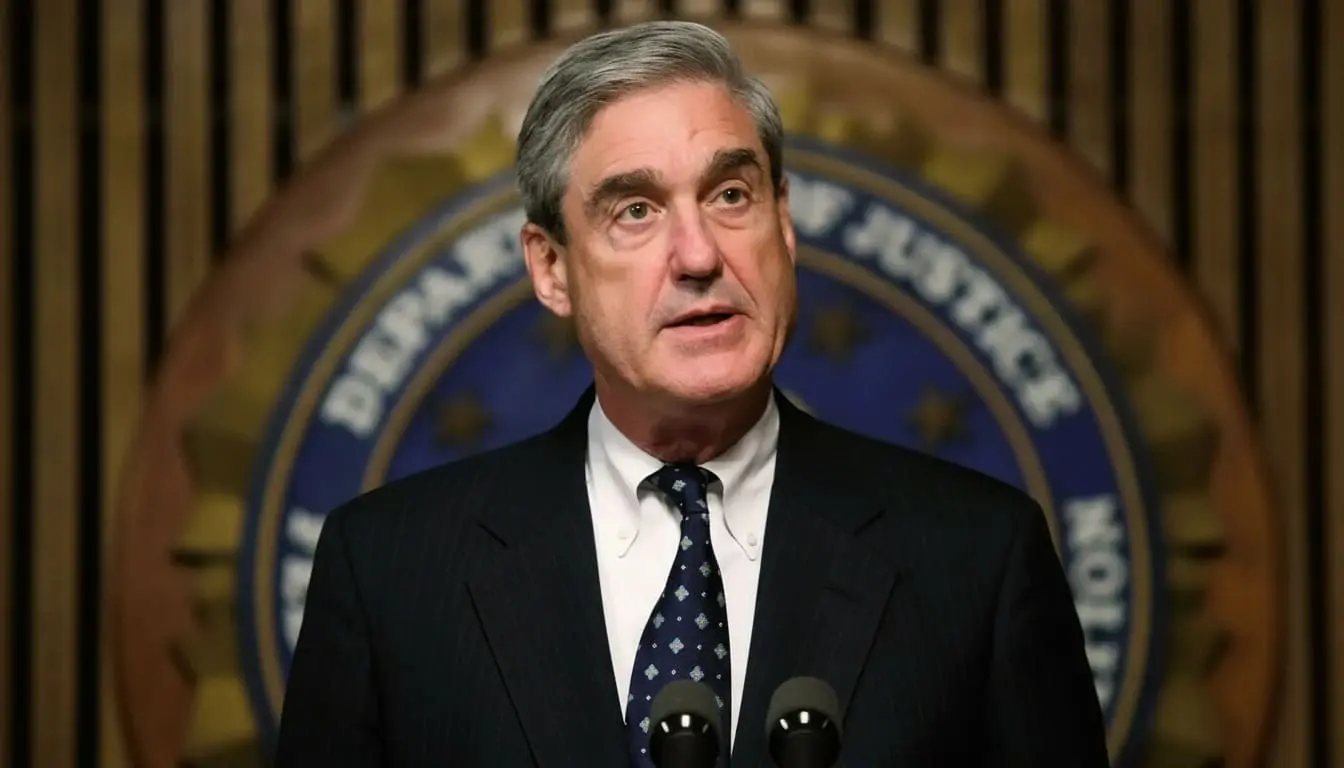
Robert Mueller Dies at 81, Ending a Defining Era in U.S. Law Enforcement
Robert Mueller dies at 81, marking the end of a decades-long career that reshaped American law enforcement and played a central role in one of the most consequential political investigations in modern U.S. history.
The former FBI director and special counsel passed away on March 20, 2026, according to a statement released by his family.
Mueller’s legacy spans from leading the FBI through the aftermath of the September 11 attacks to overseeing the high-profile investigation into Russian interference in the 2016 U.S. presidential election.
A Career That Transformed the FBI
Robert Mueller dies at 81, leaving behind one of the most influential tenures in FBI history.
Appointed FBI director just one week before the 9/11 attacks in 2001, Mueller quickly shifted the bureau’s mission from traditional crime-fighting to counterterrorism and national security.
He served as director for 12 years, making him one of the longest-serving leaders of the agency in modern history.
During his tenure, Mueller helped modernize intelligence gathering, expanded surveillance capabilities, and reoriented the FBI toward preventing future attacks — a transformation that continues to define the agency today.
Special Counsel and the Trump-Russia Investigation
A major chapter in his career came in 2017, when Mueller was appointed special counsel to investigate Russia’s interference in the 2016 election and potential links to Donald Trump’s campaign.
The investigation lasted nearly two years, resulting in multiple indictments and convictions of key figures.
While the probe did not establish a criminal conspiracy, it documented extensive Russian interference and raised questions about obstruction of justice.
The findings became one of the most debated political reports in recent U.S. history, shaping public discourse and influencing national politics for years.
Military Service and Early Career
Before his legal career, Mueller served as a U.S. Marine Corps officer in the Vietnam War, where he was awarded the Bronze Star and Purple Heart for bravery.
He later built a distinguished career in the Justice Department, serving as a federal prosecutor and holding several high-level positions before becoming FBI director.
Mueller was widely respected across party lines for his discipline, integrity, and nonpartisan approach, qualities that defined his leadership style throughout his career.
Health Struggles Before His Death
In the years leading up to his death, Mueller had been dealing with Parkinson’s disease, which his family revealed publicly in 2025.
The illness gradually affected his ability to speak and appear in public, leading him to step away from professional life in his final years.
Reactions and Political Impact
News that Robert Mueller dies at 81 quickly sparked reactions across the political spectrum.
Supporters praised his commitment to justice and institutional integrity, emphasizing his role in defending democratic processes. Critics, however, remained divided over his handling of the Trump investigation.
His death also reignited debate about his legacy — whether defined more by his FBI leadership after 9/11 or by the political storm surrounding the Russia probe.
Why Robert Mueller’s Legacy Matters
The moment Robert Mueller dies at 81 is more than just the passing of a public figure — it marks the end of a generation of leadership in U.S. law enforcement.
His influence can be seen in:
- The FBI’s transformation into a counterterrorism-focused agency
- The legal framework around election interference investigations
- The role of special counsels in politically sensitive cases
- The ongoing national conversation about accountability and executive power
❓ FAQ
Q1: When did Robert Mueller die?
A: Robert Mueller died on March 20, 2026, at the age of 81.
Q2: Who was Robert Mueller?
A: He was a former FBI director (2001–2013) and special counsel who led the investigation into Russian interference in the 2016 U.S. election.
Q3: What was his most famous investigation?
A: The Trump-Russia investigation, which examined links between the Trump campaign and Russian officials.
Q4: Did the investigation charge Donald Trump?
A: No, the report did not charge Trump but outlined evidence and raised questions about obstruction of justice.
Q5: What illness did he have?
A: Mueller had been diagnosed with Parkinson’s disease in 2021.
Stay connected with TrendScoop360 for more updates on this story and other trending news across the United States and the whole world.