

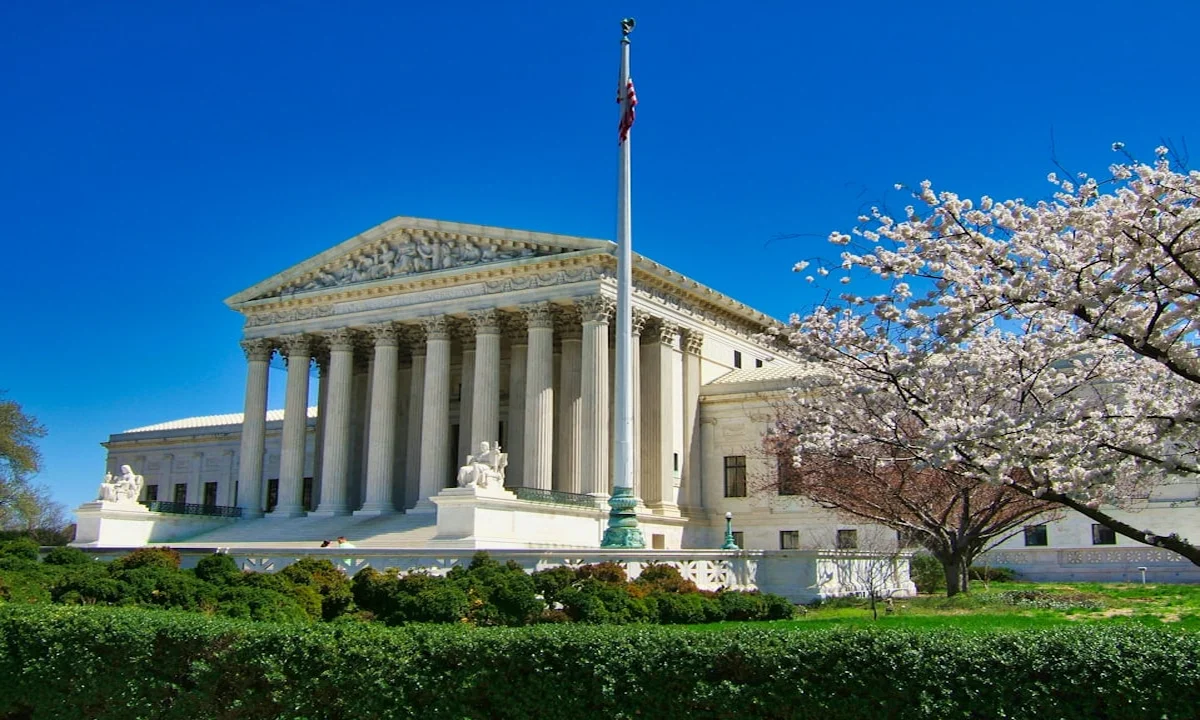
Supreme Court marijuana gun rights 2026 just became the most explosive legal story in America. In a unanimous 9-0 ruling handed down Thursday morning in Washington, the United States Supreme Court ruled that the federal government cannot automatically strip gun rights from casual marijuana users — delivering a landmark Second Amendment victory that will reshape how prosecutors approach gun charges tied to drug use across all 50 states.
The Supreme Court marijuana gun rights 2026 decision in U.S. v. Hemani was authored by conservative Justice Neil Gorsuch and joined by all eight other justices. It strikes a significant blow against a federal statute that has been used to imprison thousands of Americans — and it is the same law that sent Hunter Biden, son of former President Joe Biden, to trial in June 2024.
Supreme Court Marijuana Gun Rights 2026: What the Court Actually Decided
The case centered on Ali Danial Hemani, an American-Pakistani dual citizen and Texas resident who told federal agents he used marijuana about every other day. In 2022, FBI agents searched the home he shared with his parents in Denton County, Texas, and found a Glock 9mm pistol, marijuana, and cocaine. The Justice Department noted that Hemani’s travel to Iran and his brother’s attendance at an Iranian university had drawn FBI attention — but chose to charge him with a single count under the Gun Control Act, which makes it a crime for any “unlawful user of a controlled substance” to possess a firearm.
That charge carried a potential sentence of up to 15 years in prison and a lifetime firearms ban.
The Supreme Court, in its unanimous ruling, found that prosecuting Hemani under that law violated the Second Amendment. Writing for the court, Justice Gorsuch said the government had not “carried its conceded burden of showing its prosecution of Mr. Hemani is consistent with our Nation’s historical tradition of firearms regulation.”
“We appreciate that drugs and guns can sometimes make for a dangerous mix,” Gorsuch wrote. “We appreciate, too, that the government’s effort to analogize a modern statute addressing drug use to historical laws must be approached with a sensitivity to the fact that many drugs well known today were unknown in early America.”
The ruling does not strike down the entire statute. The court’s decision is described as “narrow” — it does not prevent prosecutors from charging gun possession by someone who is actively intoxicated or who can be shown to pose a specific danger. But it bars the government from automatically disarming a person simply because they use marijuana a few times a week.
The Hunter Biden Connection: The Law That Changed a Presidency
The Supreme Court marijuana gun rights 2026 ruling lands with maximum political resonance because of one name: Hunter Biden. The son of former President Joe Biden was convicted in June 2024 under the exact same federal statute at the center of the Hemani case — 18 U.S.C. § 922(g)(3) — for illegally purchasing a firearm while addicted to drugs. President Biden then pardoned his son before leaving office.
The parallel is uncomfortable for multiple parties. The Trump administration’s own Justice Department defended the statute before the Supreme Court, urging the justices to uphold the restriction. The administration argued that “habitual users” of illegal drugs could be disarmed under historical precedent — a position the court rejected 9-0, including from justices appointed by Trump himself.
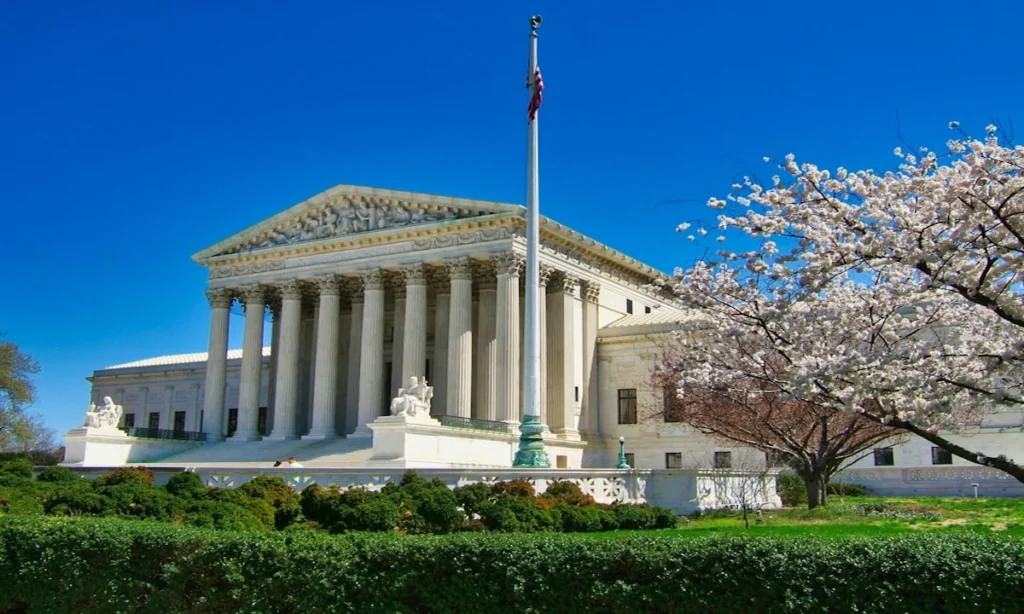
According to CNBC’s coverage, updated two hours ago, the ruling “adds to a growing body of firearm decisions reshaping U.S. gun law” following the court’s landmark 2022 decision that recognized the right to carry a firearm outside the home.
What Changes Now: A Seismic Shift for Gun Prosecutions
The practical consequences of the Supreme Court marijuana gun rights 2026 ruling are significant and immediate. Federal prosecutors across the country will now need to reassess pending cases involving gun charges tied to drug use. The statute cannot be applied automatically — the government must now demonstrate a specific connection between a person’s drug use and a genuine risk of danger before charging them under the law.
For the millions of Americans who live in states where marijuana is legal under state law but remain federal drug users, the ruling offers a measure of protection against federal gun charges. A regular marijuana user in Colorado, California, or New York who legally purchases a firearm under state law has been technically violating federal law since it was passed in 1968. The Hemani ruling makes it significantly harder for federal prosecutors to charge them.
According to CBS News, updated just two hours ago, “the high court said the government cannot automatically disarm a person who uses marijuana a few times a week.”
For gun rights advocates, this is a major victory. For gun control groups, it is a setback — though even the Giffords Law Center to Prevent Gun Violence noted that “reasonable categorical prohibitions on firearms ownership” remain constitutionally available to Congress and prosecutors.
The Bigger Picture: The Second Amendment’s Expanding Reach
The Supreme Court marijuana gun rights 2026 case is the latest in a string of Second Amendment expansions that began with the court’s landmark 2022 ruling in New York State Rifle & Pistol Association v. Bruen. That decision established a new constitutional test requiring the government to show that any gun restriction is consistent with the nation’s historical tradition of firearms regulation — the same test applied in the Hemani case.
Since 2022, the court has struck down a federal ban on bump stocks and applied the new historical test to multiple other challenges. The Hemani ruling is the most significant application of the Bruen framework since the decision itself. It signals that the court is willing to use the historical tradition test to strike down provisions of the Gun Control Act that have been on the books for more than 50 years.
As Newsweek reported, published three hours ago: “The ruling adds to a growing body of firearm decisions reshaping U.S. gun law.”
What the Justices Left Open
The Hemani ruling is explicitly limited in scope. The court did not:
Strike down the entire federal drug user gun ban. Prosecutors can still potentially charge a marijuana user under the statute — they simply cannot do so based on drug use alone, without evidence of actual dangerousness.
Address the question of gun rights for drug addicts or people who are presently intoxicated. “We do not address efforts to ban addicts, or those presently intoxicated, from possessing a firearm,” Gorsuch wrote.
Resolve the broader tension between state marijuana legalization and federal drug law. In a majority of states, marijuana is legal in some form. Federal law still classifies it as a Schedule I controlled substance. The court’s ruling narrows one consequence of that conflict but does not eliminate it.
For millions of Americans navigating the intersection of state marijuana legalization and federal firearms law, the Hemani ruling is a significant step — but not the final word.
What Comes Next
The Justice Department will need to issue new guidance to federal prosecutors on how to handle pending and future cases involving gun charges tied to drug use. Congress could attempt to rewrite the statute to meet the new constitutional standard — though in the current political environment, any gun-related legislation faces an uphill battle.
For Ali Hemani, the ruling ends a legal ordeal that began when FBI agents searched his home four years ago. He was never charged with terrorism, drug trafficking, or any crime other than the single gun possession count. The Supreme Court has now said that charge cannot stand under the Constitution.
Follow all breaking US Supreme Court and political news at TredScoop360.com. Read our latest coverage of the Texas Senate race 2026 and Trump’s stock trades controversy for the full picture of America’s most consequential political stories.
More From TredScoop360
- Laredo Texas Plane Crash 2026: Bystanders Use Sledgehammer to Save Trapped Passengers, 1 Dead
- B-52 Bomber Crashes at Edwards Air Force Base 2026: 8 Dead in Deadliest US Military Crash Since 1982
- Missouri Skydiving Plane Crash 2026: 12 Killed Near Butler Airport — NTSB Investigates