

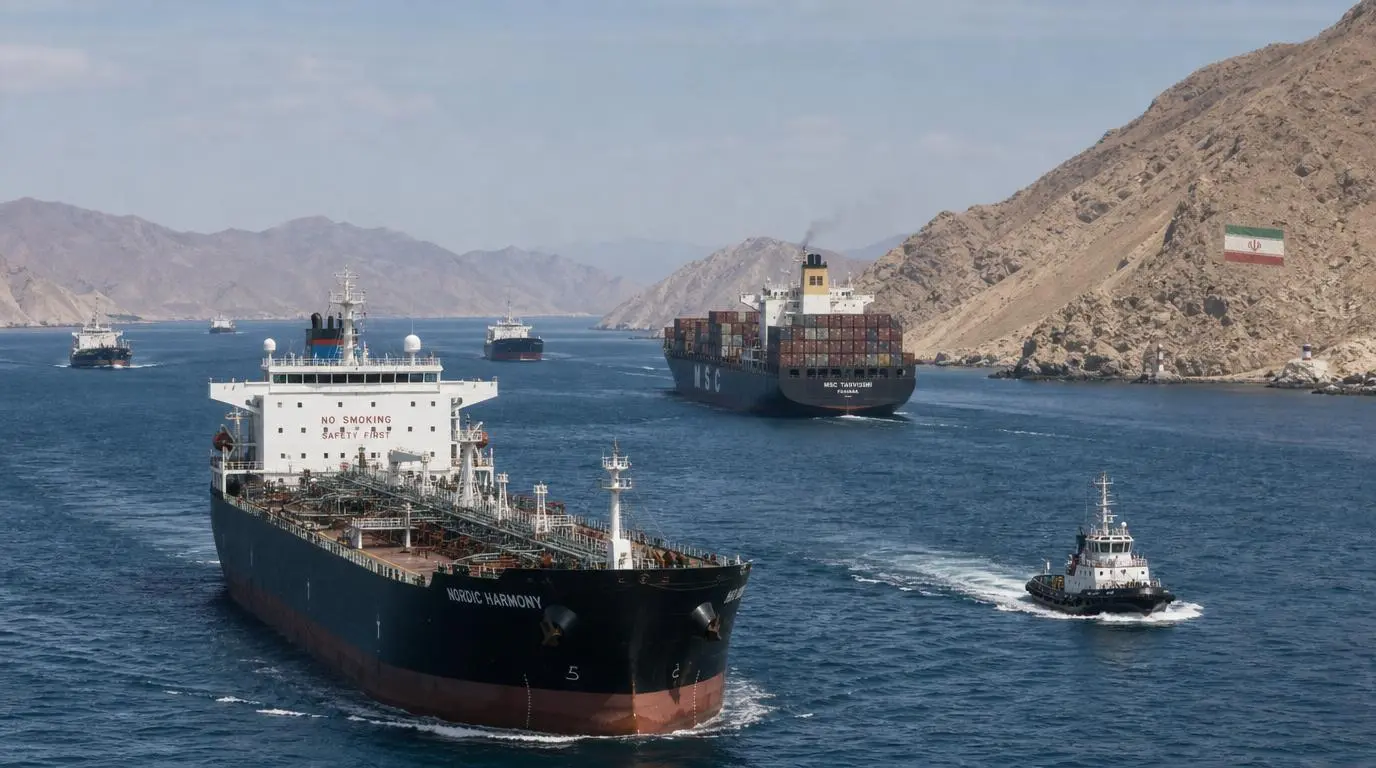
US strikes Iran 2026 marks the first direct American military action against Tehran since the two countries signed a fragile ceasefire just over a week ago, after Iranian forces launched drone attacks against a commercial cargo ship navigating the Strait of Hormuz. President Trump called the assault a “foolish violation” of the agreement, and within hours, US Central Command confirmed American aircraft had struck Iranian missile and drone storage facilities along with coastal radar sites in direct response.
The US strikes Iran 2026 episode threatens to unravel a peace process that had only just begun, coming barely a week after Trump and Iranian President Masoud Pezeshkian signed a memorandum of understanding intended to build toward a permanent end to months of war. Vice President JD Vance had traveled to Switzerland just days earlier for follow-up talks with Iranian counterparts on that same deal.
US Strikes Iran 2026: What Triggered the Attack
The crisis began Thursday when the Islamic Revolutionary Guard Corps launched at least four one-way attack drones at vessels transiting the Strait of Hormuz along the Omani coast. According to Trump, American and allied forces successfully intercepted three of the drones, but the fourth struck the upper deck of the Ever Lovely, a Singapore-flagged cargo ship. “Damage was done, but the Ship was able to proceed on its way,” Trump wrote in a Truth Social post. “Obviously, this is a foolish violation of our Ceasefire Agreement.”
US Central Command did not wait long to respond. In a statement posted Friday, CENTCOM confirmed that American aircraft “struck Iranian missile and drone storage locations and coastal radar sites” in what it described as a response to Iran’s “dangerous behavior.” The command characterized Iran’s drone attack as “unwarranted aggression against commercial shipping” that “clearly violated the ceasefire” and “undermined freedom of navigation through the vital international trade corridor.”
“CENTCOM forces continue to provide safe passage coordination and support to commercial vessels transiting the strait,” the command added, noting that US forces remain “present and vigilant” in the region.
Trump’s Measured Response: Strikes, But No Clear Escalation Promise
Despite ordering the retaliatory strikes, Trump notably declined Friday to commit to further consequences for Iran when pressed by reporters in the Oval Office. Asked directly whether Tehran would face additional repercussions, the president did not give a definitive answer.
“I don’t like the fact that they took a shot yesterday — actually four, we knocked down three — at a ship, not an allied ship, but a ship, a very expensive ship,” Trump told reporters. The careful framing — emphasizing that the vessel was not allied to any specific nation, while still treating the attack as a serious ceasefire breach — suggests an administration trying to project strength without fully abandoning the diplomatic track it has invested heavily in over recent weeks.
Panic in the Gulf: Dubai’s False Missile Alert
Shortly after news of the strikes broke, residents across Dubai received a mobile phone alert warning of an incoming missile, only for UAE authorities to quickly follow up with a message instructing them to “disregard the previous warning.” The alert — the first of its kind received by UAE residents since the original US-Iran ceasefire took effect last week — underscored just how rattled the wider Gulf region has become as the fragile peace shows signs of strain.
Shortly after the false alarm was clarified, the UAE government revealed that its foreign minister, Sheikh Abdullah bin Zayed Al Nahyan, had held a phone call with Iranian Foreign Minister Abbas Araghchi, during which Sheikh Abdullah “emphasized the importance of full commitment” to the US-Iran memorandum of understanding.
Maritime Chaos: Hundreds of Ships and Sailors Evacuated
The practical consequences of the renewed hostilities have been immediate and severe for global shipping. According to the United Nations’ International Maritime Organization, approximately 115 vessels and 2,500 sailors have been evacuated from the Persian Gulf via the Strait of Hormuz since Tuesday alone.
The IMO had been in the process of a much larger evacuation effort — attempting to move roughly 600 ships and 11,000 sailors out of the region — before formally suspending those operations Thursday following the attack. The suspension of evacuation efforts in the middle of an active crisis leaves an enormous number of commercial vessels and crew members in a precarious position.
The Bigger Picture: A Peace Deal Already Under Strain
Friday’s strikes did not occur in isolation — they landed amid a broader set of disputes that had already been straining the US-Iran memorandum of understanding well before this week’s drone attack. Tehran and Washington remain at odds on basic points within the agreement, including who controls navigation through the Strait of Hormuz and how Iran will be permitted to spend its unfrozen financial assets.
David Albright, a longtime Iran nuclear expert, offered a skeptical read on the broader trajectory of negotiations, suggesting that Iran’s historical pattern of using prolonged talks to quietly advance its nuclear and missile programs “colors my view of the MOU.” Albright pointed specifically to how Iran treats inspections from the International Atomic Energy Agency as the real test of whether the broader diplomatic framework is producing genuine results.
Twenty-two Iranian crew members from an oil tanker previously intercepted by US forces have reportedly been transferred to Iran’s consulate in Karachi, according to Iranian state media and Pakistan’s foreign minister — a small but notable sign that some logistical elements of the broader de-escalation process are still functioning even as the core ceasefire wobbles.
A Silver Lining: Israel and Lebanon Sign Framework Deal
Amid the deteriorating Iran situation, one piece of genuinely positive diplomatic news emerged Friday. Secretary of State Marco Rubio announced the outline of a framework agreement between Israel and Lebanon, describing it as a “first step” toward a more durable peace arrangement between the two nations. Notably, Hezbollah was not party to the negotiations.
What Trump’s Iran Deal Promises — And What’s Still Unresolved
Separately, Trump indicated Thursday that funds from Iran’s unfrozen financial assets — a key component of the broader memorandum — would be used to purchase American agricultural crops for the Iranian people, a detail that suggests at least some elements of the original economic framework remain operative despite Friday’s military exchange.
Iran’s Foreign Ministry spokesperson Esmaeil Baqaei struck a defiant tone: “Iran’s national security and dignity are matters that brook no compromise or condition; just as the inherent right to legitimate self-defense is not open to discussion, the means of this defense cannot be subject to bargaining or concession with any party.”
What Happens Next
The US strikes Iran 2026 episode leaves the broader 60-day negotiating window established by last week’s memorandum in a precarious position. Whether Friday’s exchange of attacks represents a contained, one-time escalation that both sides quietly absorb and move past, or the beginning of a more serious unraveling of the ceasefire, will likely become clearer in the coming days.
For global oil markets and American consumers who have only recently begun seeing relief at the gas pump as the Strait of Hormuz reopened to traffic, renewed instability in the region carries direct economic consequences. With hundreds of ships and thousands of sailors still navigating an evacuation freeze in the Gulf, the coming 48 hours are likely to determine whether this week’s crisis becomes a temporary setback or a genuine turning point back toward broader conflict.