

Iran talks collapse Switzerland 2026 unfolded within hours on Sunday, as high-stakes nuclear and ceasefire negotiations at a luxury resort overlooking Lake Lucerne dissolved into mutual threats, a walkout by Iran’s delegation, and renewed warnings of military strikes — just four days after President Trump and Iran’s president signed a memorandum of understanding meant to end months of war.
The Iran talks collapse Switzerland 2026 crisis began when President Trump warned Tehran to stop what he called its “highly paid proxies” in Lebanon from “causing trouble,” declaring that Washington would “hit them very hard again” if Iran did not rein in Hezbollah. According to a diplomat briefed on the talks, Trump separately warned Vice President JD Vance’s Iranian counterparts that they would never get home to their “f**king country” if Iran did not reopen the Strait of Hormuz. Iran’s delegation left the venue within the hour.
What Happened at the Burgenstock Resort
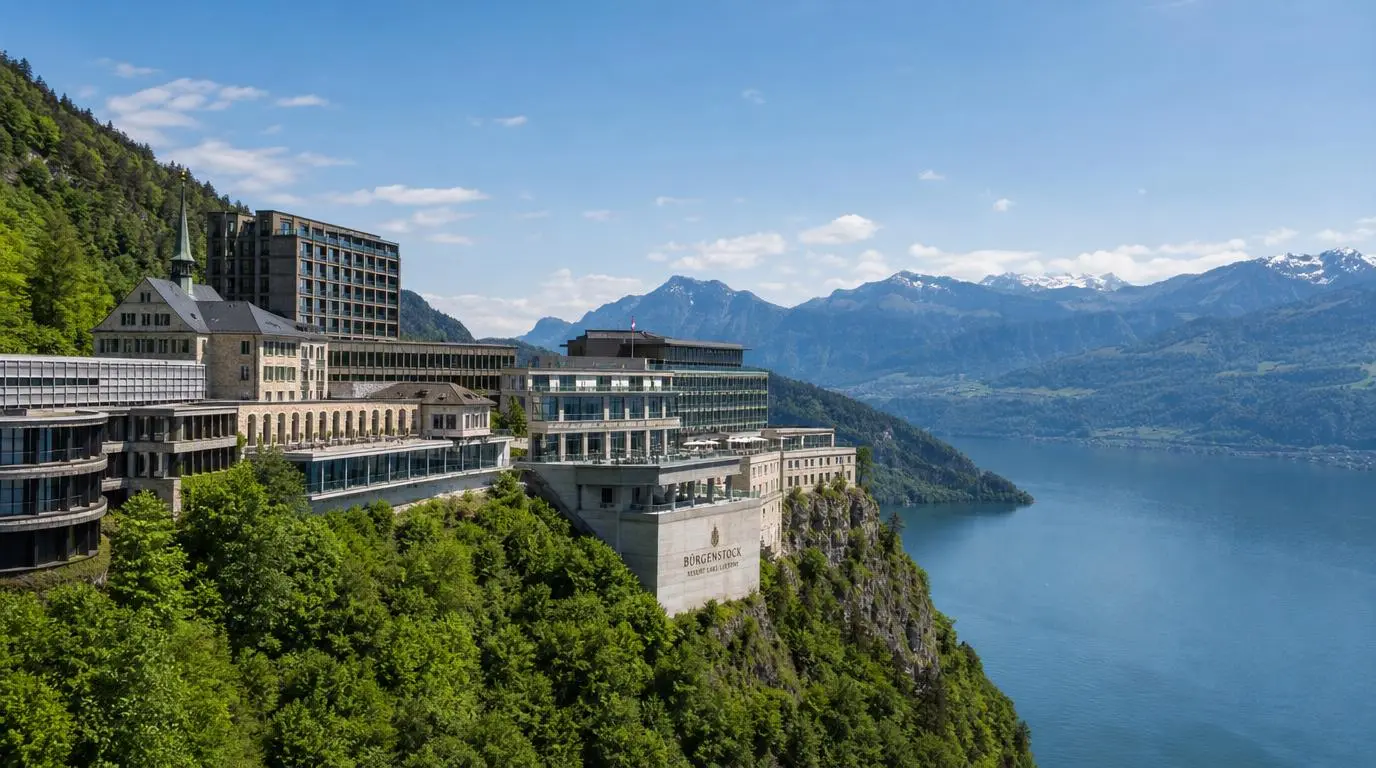
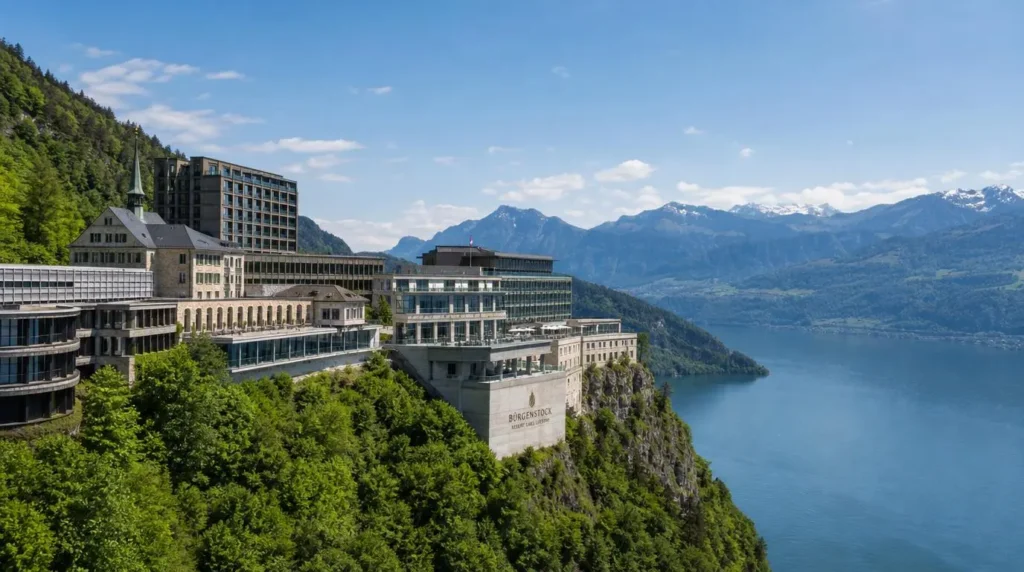
The session that triggered Iran talks collapse Switzerland 2026 took place at the Burgenstock luxury hotel complex overlooking Lake Lucerne, where delegations from the United States, Iran, Pakistan and Qatar gathered Sunday for the first formal follow-up meeting after last week’s memorandum of understanding. Vice President Vance, joined by President Trump’s special envoy Steve Witkoff and Jared Kushner, opened the session by thanking Pakistani and Qatari mediators for their role in the diplomacy.
The optics alone signaled tension before talks even began. According to CBS News correspondent Margaret Brennan, Iran’s Foreign Minister Abbas Araghchi entered the room alongside Vance only briefly before exiting view of television cameras — and Iranian officials declined to stand alongside the US, Pakistani and Qatari delegations for the customary group photograph.
The first formal session lasted roughly 80 minutes before talks were paused. Iran’s semi-official Tasnim news agency, citing a source close to the negotiating team, reported that the Iranian delegation left the venue in protest specifically over Trump’s comments. Iran’s state-run IRNA news agency later reported that the delegation had departed following a separate meeting with Qatari mediators, fueling speculation that the entire diplomatic track had collapsed entirely.
Trump’s Threat, Word for Word
The language at the center of Iran talks collapse Switzerland 2026 is unusually blunt even by the standards of this administration’s public diplomacy. Trump warned that Washington would strike Iran again if Tehran did not stop Hezbollah’s attacks on Israeli forces in southern Lebanon, attacks he directly blamed for escalating violence that has continued despite a ceasefire reached just days earlier.
Separately, according to a diplomat present at the talks, Trump warned the Iranian negotiators in Switzerland that they would not be able to return home if Iran followed through on its threat to close the Strait of Hormuz again. Iran’s Tasnim news agency confirmed the substance of this warning, and Mahmoud Nabavian, a member of the Iranian parliament’s National Security Committee, publicly criticized Iran’s own negotiating team in the aftermath — a sign of how badly the exchange landed in Tehran.
Senator Lindsey Graham added his own warning during the same news cycle: “If this diplomatic effort fails, President Trump is going to take the Strait of Hormuz. We’re going to run it,” Graham said, adding that the administration would push Saudi Arabia to join the Abraham Accords and that continued Iranian attacks on Israel and Lebanon would trigger renewed US strikes.
Why Lebanon Became the Breaking Point
The proximate cause of Iran talks collapse Switzerland 2026 traces directly back to the unresolved conflict in Lebanon. The memorandum of understanding signed by Trump and Iran’s president last Wednesday calls for hostilities to end “on all fronts, including in Lebanon” — but neither Israel nor Hezbollah were actual parties to that agreement, leaving its enforcement entirely dependent on parties who never signed it.
Three diplomats briefed on the matter told CBS News that Israel and Hezbollah had separately agreed to a ceasefire in Lebanon scheduled to begin Friday morning. That truce did not hold. More than a dozen people were killed in Lebanon by Israeli strikes overnight Saturday — hours after the ceasefire was reportedly reached — prompting Iran to declare it would close the Strait of Hormuz again, accusing the US and Israel of violating the memorandum.
Hezbollah leader Naim Qassem argued publicly that Israel had no right to continue operating in Lebanon, directly contradicting Israeli Prime Minister Benjamin Netanyahu’s statement that Israeli troops would remain in southern Lebanon “as long as necessary” to maintain what he called a security zone.
The Internal US Rift: Rubio vs. The Envoys
A previously unreported tension inside the Trump administration has now surfaced as part of the Iran talks collapse Switzerland 2026 story. According to a Middle Eastern official, the special envoys leading the Switzerland negotiations are out of sync with Secretary of State Marco Rubio, particularly regarding strategy on Israel and Hezbollah.
Rubio had reportedly been working to keep the US-Iran war and the separate Israel-Hezbollah conflict diplomatically distinct from one another. The memorandum’s first clause, which explicitly addresses a permanent end to the Lebanon situation, effectively bypassed that strategy — something Israeli officials reportedly viewed as an unplanned concession to Iran made by Trump’s envoys rather than a deliberate, coordinated US position.
That internal disconnect helps explain why the Lebanon issue has proven so combustible: different parts of the US government appear to have different read on how central the Lebanon ceasefire was ever supposed to be to the broader Iran deal.
Is It Really Over? Conflicting Signals
Despite the dramatic walkout, multiple sources caution against declaring the entire diplomatic process dead. An Iranian source told CNN that negotiations are “stalled, but not over yet,” with back-channel dialogue continuing in an effort to bring all parties back to the table. A separate diplomat participating in the talks disputed reports that the Iranian delegation had left entirely, telling Axios reporter Barak Ravid that the situation remained fluid.
According to Iranian government spokesperson Fatemeh Mohajerani, negotiations were primarily focused on implementing Clause 13 of the memorandum and establishing groundwork on five core issues: ending the war on all fronts, lifting the siege, reopening the Strait of Hormuz, temporary sanctions exemptions for oil exports, and releasing Iran’s frozen assets. Mohajerani indicated other provisions of the agreement would not move into an implementation phase until the Lebanon ceasefire issue is resolved — meaning Sunday’s breakdown directly threatens the entire 60-day negotiating framework before it has barely begun.
Vance, for his part, struck a more optimistic tone before the session collapsed, saying “I feel great about where we are in Lebanon” and that “great progress has been made” in recent days, while acknowledging that Trump had “committed us to see a full regional ceasefire.”
What This Means for Gas Prices and the US Economy
The Iran talks collapse Switzerland 2026 crisis carries immediate economic stakes for American consumers. Gas prices had ticked below $4 per gallon for the first time since the conflict began in late February, a direct result of oil beginning to flow again through the Strait of Hormuz following last week’s memorandum.
If Iran follows through on its threat to close the strait again — a threat it has now made explicitly in response to the unresolved Lebanon situation — those gains could reverse quickly. Roughly 20% of the world’s oil supply transits through the strait, and any renewed closure would almost certainly send gas prices climbing again just as the summer driving season reaches its peak.
What Happens Next
As of Sunday evening, talks in Switzerland are continuing in some capacity, according to US officials, even as the formal session remains paused following the walkout. An emergency session specifically addressing the Lebanon fighting has reportedly been added to the agenda, reflecting recognition among all parties that the Lebanon ceasefire issue must be resolved before the broader 60-day nuclear negotiation period can meaningfully proceed.
For an agreement signed with considerable fanfare just days ago at the Palace of Versailles, the speed of Sunday’s breakdown is a stark reminder of how fragile Middle East diplomacy remains — and how directly American gas prices, financial markets, and the broader 2026 political landscape are now tied to whether negotiators in a Swiss mountain resort can find their way back to the table.
Follow all breaking developments on the US-Iran negotiations at TredScoop360.com. Read our earlier coverage of Vance’s defense of the Iran deal and Trump declaring the Iran war over for the full story behind this rapidly evolving crisis.
More From TredScoop360
- Vance Iran Deal 2026: VP Defends ‘Win-Win’ MOU as GOP Hawks and Carville Both Cry Foul
- Supreme Court Rules 9-0: Marijuana Users Can Own Guns in Shocking 2nd Amendment Victory — US v. Hemani
- Laredo Texas Plane Crash 2026: Bystanders Use Sledgehammer to Save Trapped Passengers, 1 Dead