

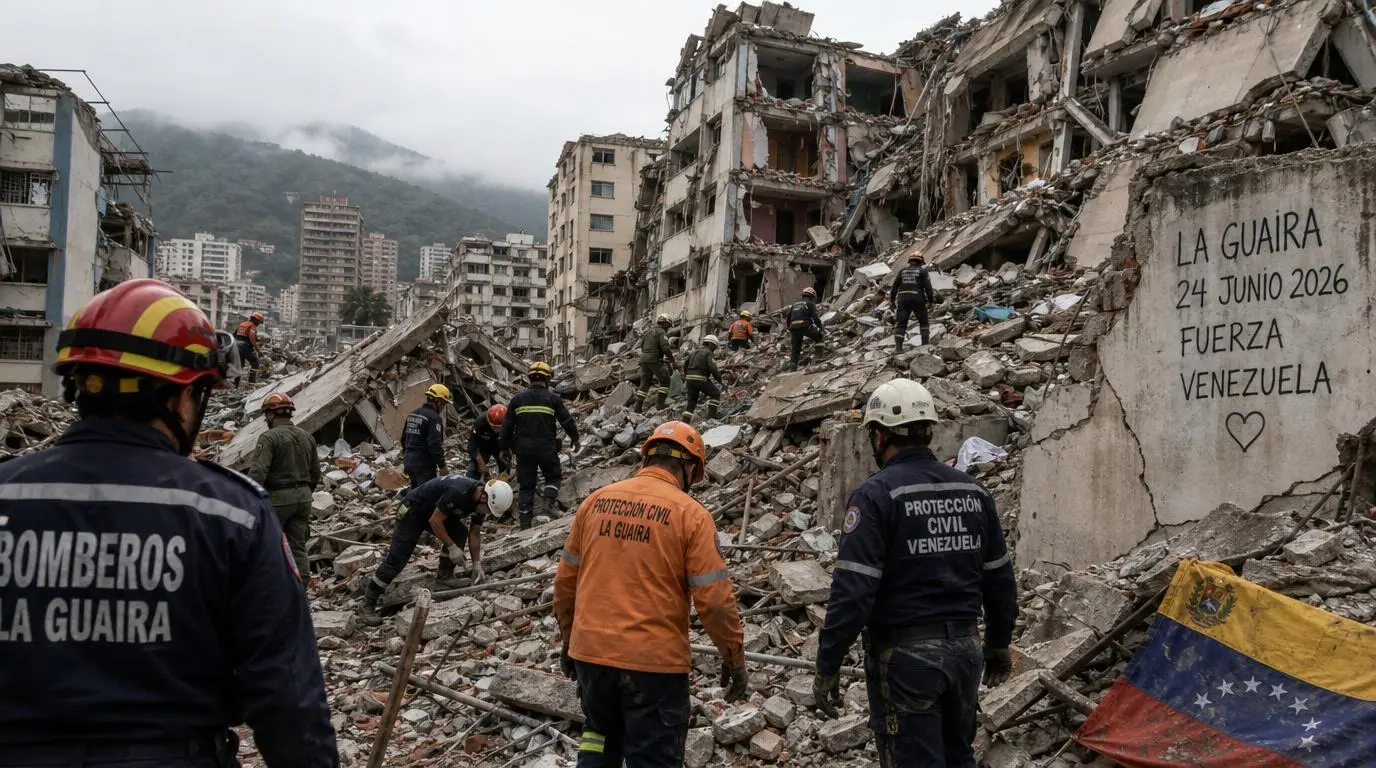
Venezuela earthquake 2026 has triggered one of the largest international rescue operations of the year, after twin earthquakes measuring 7.2 and 7.5 magnitude struck the South American country Wednesday evening, killing at least 188 people, injuring more than 1,500, and trapping an estimated 200 people beneath collapsed buildings. The United States has already begun deploying specialized search and rescue teams, with officials warning the death toll could climb dramatically in the coming days.
The Venezuela earthquake 2026 disaster struck just 39 seconds apart — a 7.2 magnitude foreshock followed almost immediately by a larger 7.5 magnitude quake — making it among the most powerful earthquakes to hit Venezuela in more than a century. The US Geological Survey has warned that the final death toll could potentially exceed 10,000 people given the scale of destruction and the country’s limited disaster-response infrastructure.
Venezuela Earthquake 2026: What Happened
The quakes struck shortly after 6 p.m. local time Wednesday, with their epicenters located near the towns of San Felipe and Yumare, roughly 100 miles west of the capital, Caracas. The timing was especially devastating: Wednesday was a national holiday in Venezuela, meaning many families were home together when the buildings around them began to shake and, in hundreds of cases, collapse entirely.
According to Jorge Rodriguez, President of Venezuela’s National Assembly, at least 188 people have been confirmed dead, with 1,520 people injured and approximately 157 still missing as of Thursday. Roughly 200 people remain trapped beneath the rubble of an estimated 250 collapsed or severely damaged buildings. Nearly 3,000 families have been directly affected by the disaster.
Survivors described scenes of pure chaos. “The scene was like a horror movie,” one woman in Caracas told Reuters after escaping her building. “We had to climb over the rubble and everything.” In the hard-hit area of La Guaira, entire apartment blocks were reduced to flattened concrete, with residents searching frantically through debris for trapped neighbors and family members.
The US Response: Search and Rescue Teams Deployed
The American response to the Venezuela earthquake 2026 crisis came swiftly and at a significant scale. Secretary of State Marco Rubio confirmed the United States was “immediately deploying search and rescue teams, medical resources, and humanitarian assistance” to Venezuela, describing the planned US response as one that would be “big, it’ll be fast, and it’ll be effective.”
Two of America’s most experienced urban search and rescue units — the Fairfax County, Virginia team and the Los Angeles County team — have been activated and are en route to Venezuela. According to Fairfax County Search and Rescue public information officer John Morrison, the Fairfax contingent alone includes 80 personnel, six specially trained search dogs, three doctors, and three structural engineering specialists, along with nearly 70,000 pounds of heavy breaching and breaking equipment needed to extract people trapped deep within collapsed structures.
US Southern Command issued a statement confirming that American military assets are being deployed to support the relief effort. “Our joint forces are moving quickly to bring the unmatched airlift, logistics, and lifesaving capabilities of the US military to help save lives and support the Government of Venezuela during this crisis,” the SOUTHCOM statement read. Rubio also confirmed the US would provide aerial imagery of the damage to help Venezuelan authorities better understand the full scope of destruction, particularly since Caracas’s main airport sustained significant damage, including a cracked runway.
Why This Earthquake Is So Devastating
Geologists have offered insight into why a quake of this magnitude has produced such catastrophic results in Venezuela specifically. Unlike countries along the Pacific “Ring of Fire” — such as Japan, where strict building codes and extensive earthquake preparedness measures have been developed over decades to withstand even powerful seismic events — Venezuela sits along the Caribbean tectonic plate and experiences major earthquakes far less frequently.
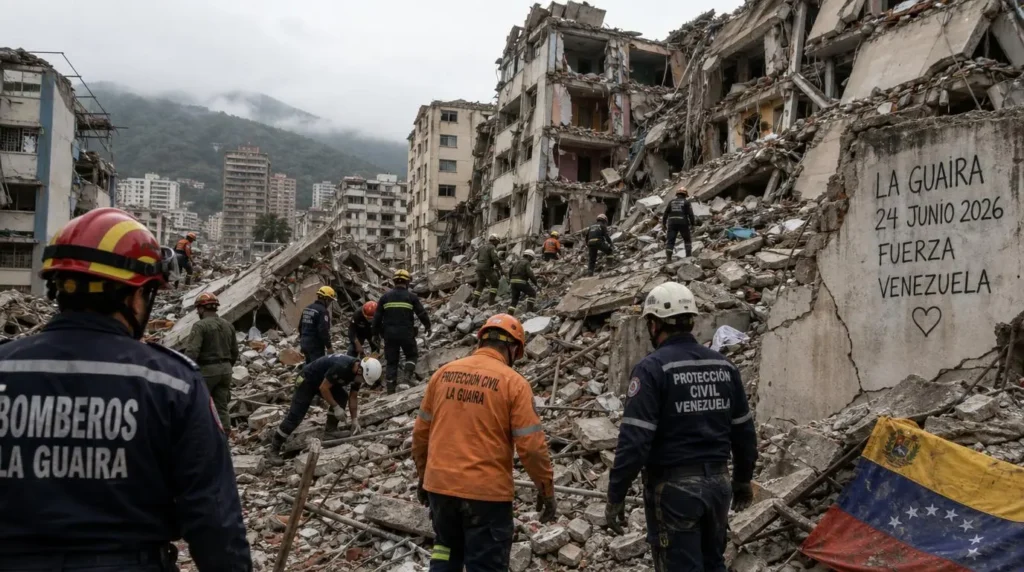
“This is one of the really great, very difficult, very damaging earthquakes, because you combined a very large event with residences of a lot of people,” seismologist Lucy Jones said in a video briefing following the disaster. The combination of a high-magnitude quake striking a densely populated urban area with infrastructure not engineered to the same seismic standards as more earthquake-prone nations has amplified the human toll dramatically.
The US Geological Survey’s preliminary modeling suggests the situation could worsen significantly as search efforts continue, with estimates suggesting the eventual death toll could range well into the thousands — and potentially as high as 10,000 — depending on how many people remain trapped in the roughly 250 damaged or collapsed structures across the affected region.
Trump’s Pledge and the Political Backdrop
President Trump weighed in directly on the disaster via social media Wednesday night, writing that he had “instructed all agencies of our government to get ready to move quickly,” adding: “We will be there for our new and great friends. Early reports are not good!!!”
The American response carries notable political context. The earthquake struck Venezuela at an already turbulent moment for the country, which has been navigating significant political upheaval following the capture of former leader Nicolás Maduro by US forces earlier this year. Acting President Delcy Rodríguez, addressing the nation on state television, declared a state of emergency and thanked Trump and the US government directly, noting that Washington had remained in “permanent contact” with Venezuelan officials throughout the unfolding crisis.
A Global Outpouring of Support
The Venezuela earthquake 2026 has prompted an immediate and broad international response beyond the United States. Mexican President Claudia Sheinbaum announced that Mexico is deploying its own team of rescuers and health personnel to assist. China, Argentina, and Brazil have also pledged support and resources. The international disaster response organization Global Empowerment Mission — founded in the aftermath of the catastrophic 2010 Haiti earthquake — mobilized reconnaissance and emergency response teams within hours, with personnel expected on the ground within a day.
Within the United States, the response has extended beyond government channels. The MLB Players Association issued a statement affirming its commitment to supporting Venezuelan players across the league, while the Miami Marlins said the organization stands “with the Venezuelan community, including those in South Florida,” pledging to work directly with local community organizations to provide support to families affected by the disaster.
According to Spain’s Foreign Affairs Minister José Manuel Albares, at least 68 Spanish nationals remain unaccounted for in Venezuela following the quake — a reminder of the disaster’s reach well beyond Venezuela’s own population, given the large diaspora communities connected to the country across Europe and the Americas.
What Comes Next
As rescue operations continue into their second day, officials and aid organizations are bracing for the death toll to rise substantially. With approximately 200 people still believed trapped beneath rubble and structural specialists working to safely access damaged buildings, the coming 48 to 72 hours are considered critical for finding survivors before the window for rescue narrows significantly.
For millions of Venezuelans living abroad, including a substantial diaspora community across the United States, the disaster has triggered an anguished scramble to reach family members and confirm their safety — a process complicated by damaged communications infrastructure and the sheer scale of destruction across multiple regions of the country.
The full human and economic cost of the Venezuela earthquake 2026 will likely not be clear for days or weeks. What is already evident is that this disaster ranks among the most destructive natural events to strike the country in living memory, and that the international response — led significantly by the United States — will play a defining role in how quickly Venezuela can begin to recover.